A physical scale inhibitor for belt presses, screw presses, centrifuges, centrate lines and digester pipework, powered by a patented electronic signal
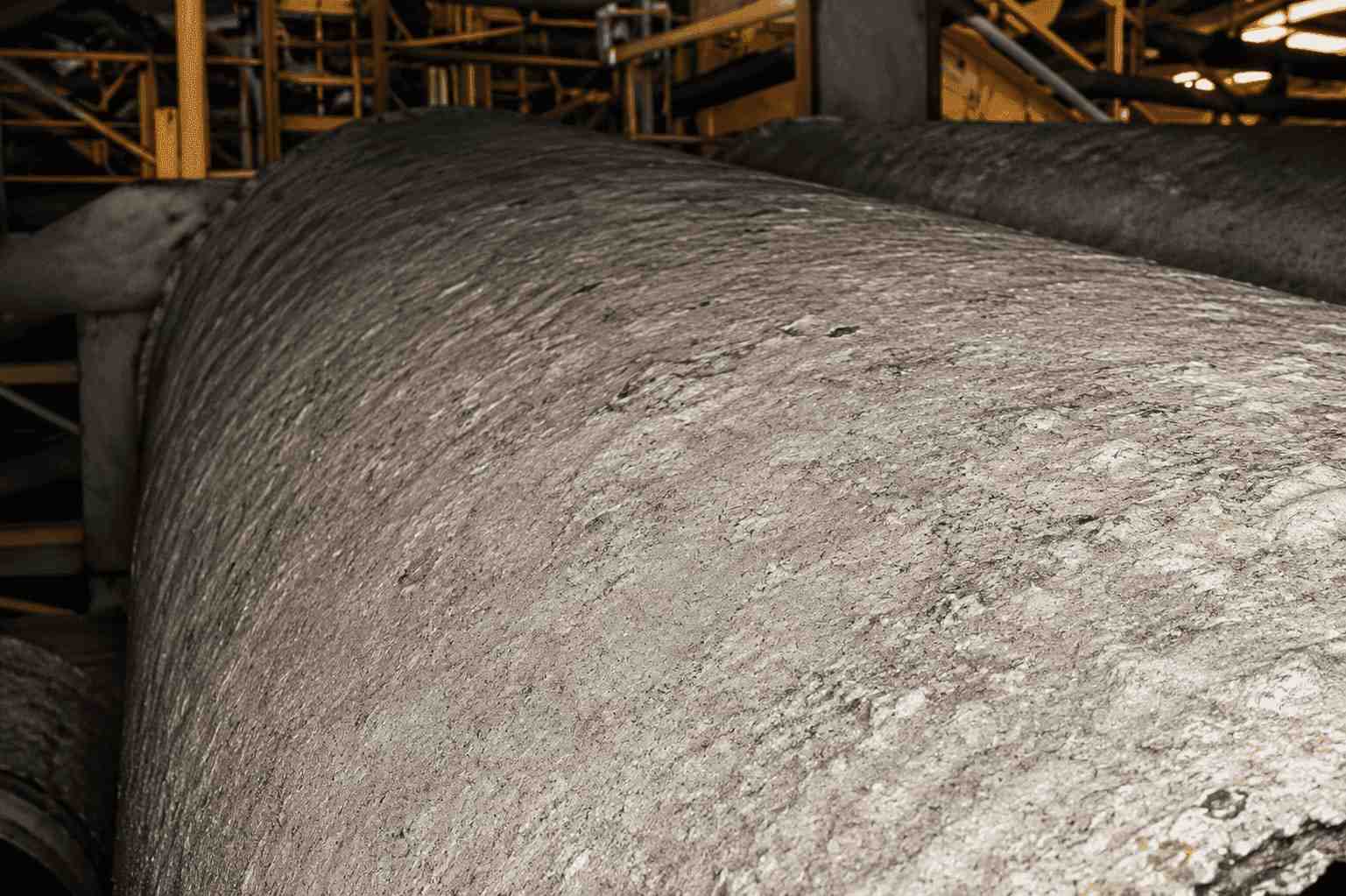
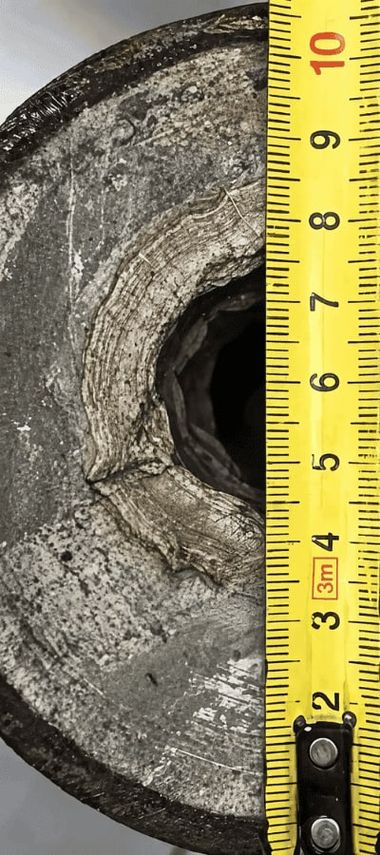
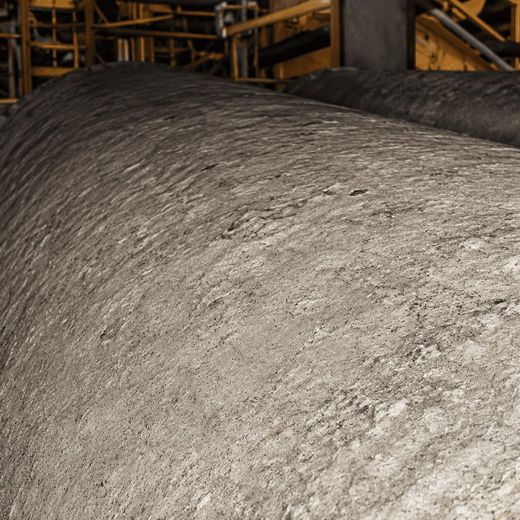
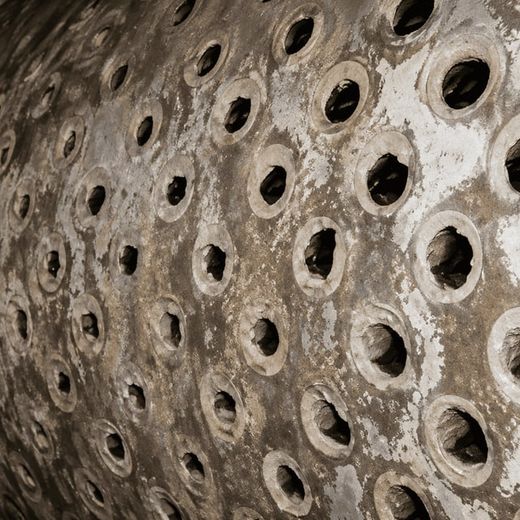
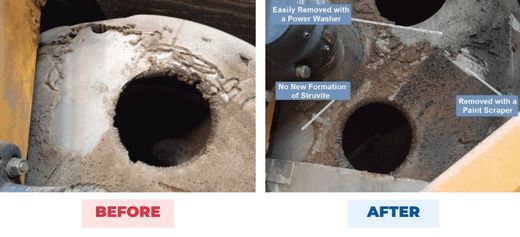
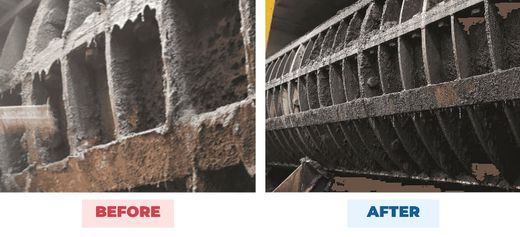
HydroFLOW®, developed by Hydropath Technology, induces a patented signal of approximately 150 kHz into the liquid through the pipe wall. The signal changes how dissolved minerals behave. Instead of magnesium, ammonium and phosphate bonding as hard struvite onto a drum, a flight or a pipe wall, they form loose clusters in the liquor. Where conditions drive crystallisation — a pressure drop, a pump, the turbulence at a press — those clusters crystallise in suspension, as fine particles carried away with the flow rather than cementing to the surfaces they pass.
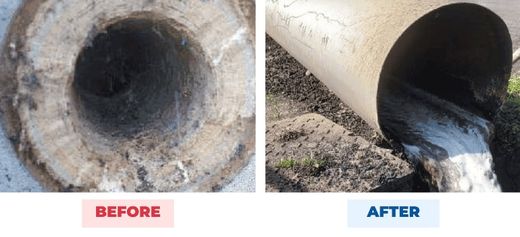
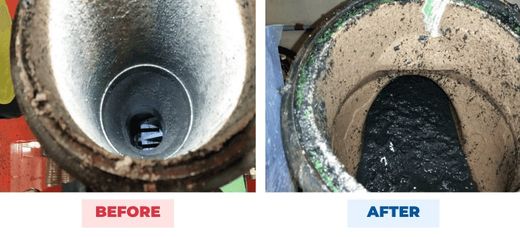
Because new scale stops bonding to the metal, the flowing liquor regains capacity to take minerals back into solution, and existing deposits soften and release over the following weeks and months. That is the pattern every case study on this page records: cleaned surfaces stay clear first, and years-old encrustation reduces afterwards. The signal propagates in both directions through the pipework, so a single unit on a sludge feed can treat the equipment beyond it — at Augusta, oscilloscope testing confirmed one unit reached both belt presses. Fitting takes about an hour on a live line, with no cut into the pipe and no shutdown.
Because the treatment changes how minerals behave rather than what the liquor contains, nothing is dosed in and nothing is taken out — no residue in the cake, no change to the biosolids destination, and nothing new to declare on the site's chemical inventory. At Denver, sampling along the treated centrate line found all three ions still at scale-forming concentrations downstream, as high at the later points as at the first — staying in the fluid rather than scaling out onto the pipe. That is the mechanism measured directly, and it is also the limit: nothing leaves the liquor, so this is not nutrient removal and it will not help you meet a phosphorus consent.