Biofouling & Biofilm Control

Biofouling & Biofilm Control

Stop Slime Settling
Keep Intakes Clear
Cut Biocide & Cleaning

HydroFLOW® controls biofouling electronically — no biocide, no anodes, no cut into the pipe, fitted while the system runs. Biofilm loses its grip, mussels and barnacles have nothing to settle on, and the chlorine you already dose reaches the bacteria it is aimed at.

  • 223 daysSeawater intake line run without cleaning or chemicals, 0 mussels against an untreated control line — desalination plant, Chile
  • 97%Fewer bacteria on river water condensers, 300,000 to 9,000 CFU — 180 MW LNG power plant, China
  • <1,000 CFUCooling-tower bio-counts, down from approximately 100,000 within days — US Southeast office complex
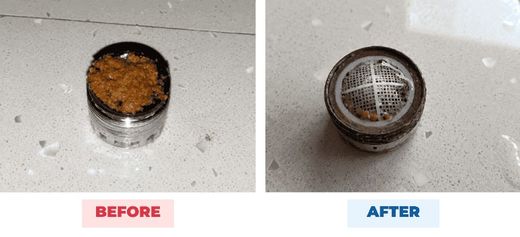
  • 30 daysTo restore a filter fully blocked by biological deposits, with no chemical or manual cleaning — Obolon Brewery, Kyiv

Results from documented case studies; vary by water source, system design and baseline operation. View all biofouling case studies →

Biofouling Costs a System Twice — Flow and Heat Transfer

Wherever untreated water flows, bacteria settle on the wetted surface and build a slime layer — biofilm — that mussels, barnacles and algae then colonise. The plant pays first: biofilm is several times more insulating than scale of the same thickness, and macrofouling narrows intakes and strainers until pumps work harder for less flow — at the V&A Waterfront in Cape Town, mussels blocked a 200 mm seawater line's strainers until jetting was routine, and at a 180 MW LNG plant in China, river water condensers needed cleaning every four to six months. The process pays second, in biocide, chlorine and the outages each clean demands. And biofilm shelters bacteria, Legionella included, from the disinfection aimed at them.

Typical signs a water system is fouling biologically:

  • Slime, "green stuff" or black gunk on tower fill, basins, plates and strainer baskets
  • Mussels, barnacles or shell fragments in sea chests, intake screens and strainers
  • Differential pressure across heat exchangers or filters rising between cleans
  • Biocide or chlorine demand creeping up while bacteria counts still drift back
  • A putrefactive smell when a vessel, filter or membrane housing is opened
  • Cleaning, hot-soak or back-flush intervals shortening year on year
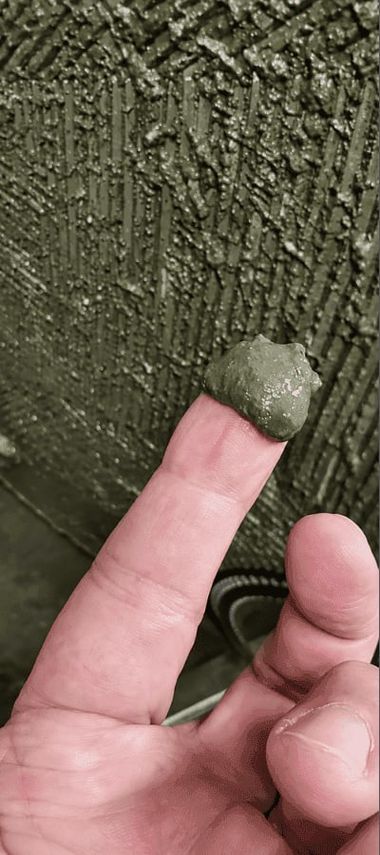
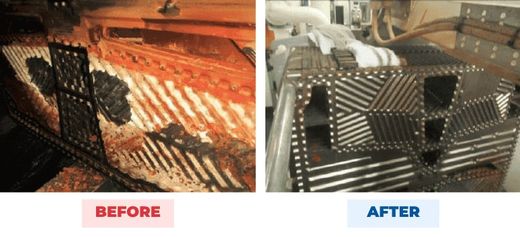
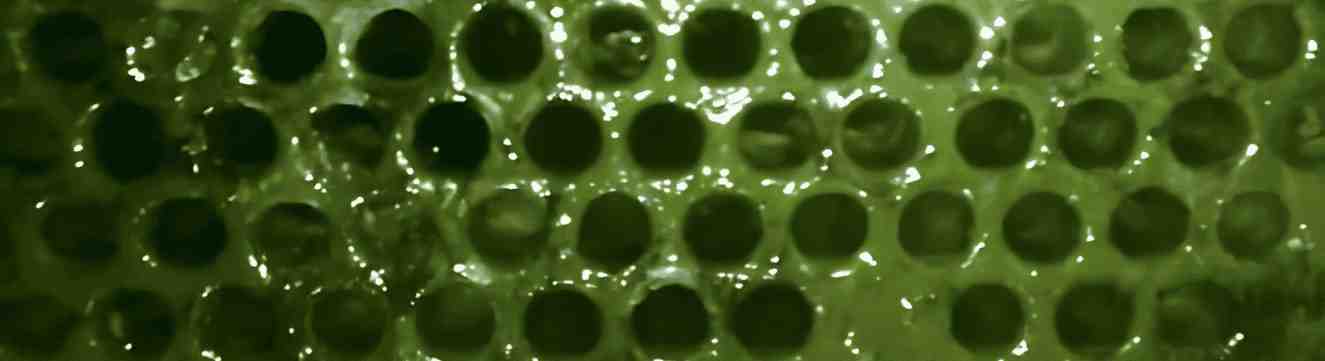
Green biofilm lifted from a seawater plate heat exchanger plate at a pump station in Hong Kong

Biofilm insulates about four times better than limescale. At roughly 0.6 W/m·K against 2.6 for calcium carbonate, a film too thin to see is already costing you heat transfer.

Conductivity values: Pinel et al., Microorganisms 9:1185 (2021); Characklis & Marshall, Biofilms (1990).

What Does Biofouling Cost a Water System?

Biofouling follows a sequence. Within hours of a surface being wetted, bacteria attach and secrete the slime that becomes biofilm; within weeks, algae, mussels and barnacles settle on that film and the fouling turns macro — blocking intakes, screens and strainers as well as insulating heat-transfer surfaces. The cost surfaces in different budget lines — pumping and chiller energy, biocide and chlorine, cleaning outages, filter and membrane replacement — which is why it is rarely added up as one number. And the chemical answer is capped: discharge consents limit how much chlorine a seawater system may release, as at a Hong Kong chiller plant held to 0.2 ppm.

  • A thin slime layer: up to 25% more fuel

    The IMO's GloFouling programme reports that a slime layer just 0.5 mm thick over half a ship's hull can raise greenhouse-gas emissions by around a quarter — before any barnacle settles. The same physics applies inside a pipe: a film you can barely see changes the friction and the heat transfer of every surface it coats.

  • 84% of cooling towers carried Legionella DNA

    A US survey of 196 cooling towers found Legionella DNA in 84% of them, with culturable Legionella in 47% of the positive samples. The WHO's explanation is the biofilm: Legionella survives and grows inside the films that develop in water systems, sheltered from the temperature and disinfectant meant to control it.

  • $267 million in mussel damage, one region alone

    Zebra mussels cost North American drinking-water and power facilities an estimated $267 million between 1989 and 2004 — roughly $30,000 to $44,000 per facility per year in cleaning, blockage and lost output. Seawater systems face the marine equivalent wherever intakes draw on a living harbour or estuary.

Interpreting the claims on this page: microbiological figures deserve scrutiny, so this page hedges where its sources hedge. HydroFLOW® is not a disinfectant and not a biocide — your chlorination consent, sampling programme and Legionella risk assessment stay exactly where they are. What the case studies show is narrower and more useful: when biofilm cannot consolidate and settled organisms detach, the existing controls reach the organisms they are aimed at, and cleaning intervals stretch. Where a site ran a controlled comparison, we say so: at a Chilean desalination plant, the treated suction line ran 223 days with no mussels while the untreated control line grew mussels over 3 cm; at a Hong Kong seawater pump station, the treated plate heat exchanger held 14–18% higher seawater flow than its untreated twin over six months. Every figure here traces to a named case study document.

The True Cost of Biofouling

Biofouling is paid for in several budget lines at once — pumping and chiller energy, biocide and chlorine, cleaning outages, filters and membranes, and the compliance exposure of counts that will not stay down — which is why it is rarely quantified as a single figure. The sections below set out where it accumulates.

  • Seawater Intakes & Strainers Blocking with Mussels

    Marine larvae settle on the biofilm inside intake lines and grow into shell beds that choke strainers and starve pumps of flow.

    ✓ With Hydropath Settled growth detaches and new growth does not take hold — at the V&A Waterfront, Cape Town, heavy biofouling discharged within two weeks and no new sea life was found over six months.

  • Biofilm on Condenser & Heat-Exchanger Tubes

    A slime film insulates the tubes, chillers run harder for the same duty, and annual tube cleaning becomes the only way to claw performance back.

    ✓ With Hydropath Tubes stay clean — at seawater-cooled chiller plants in Hong Kong, condenser tubes were free of biofilm after two months and a 14-month log showed COP up 10–15%, depending on load profile.

  • Legionella Counts the Programme Can't Hold

    Dead legs, warm return loops and low-use outlets feed biofilm, which shelters Legionella from temperature and chlorine so counts fall after each treatment and drift back.

    ✓ With Hydropath The signal destabilises the film so controls reach the bacteria — at an Indiana hospital, Legionella fell from 7 CFU/mL to 1 CFU/mL or non-detectable within 16 days and stayed stable after 15 months.

  • RO Membranes & Cartridges Fouling Early

    Bacteria in the feed grow across cartridges and membrane surfaces, so differential pressure climbs, recovery falls and the plant stops for disinfection.

    ✓ With Hydropath Fouling slows at the feed — at a Middle East RO plant, cartridge life rose from 30–60 days to 250 days and recovery rose from 65–75% to a peak of 81%.

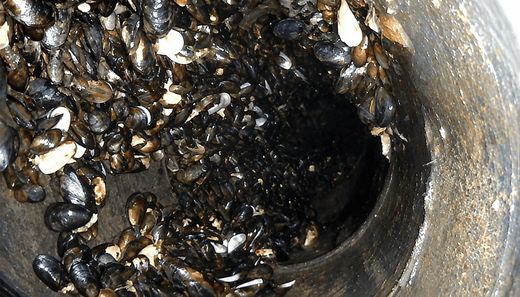
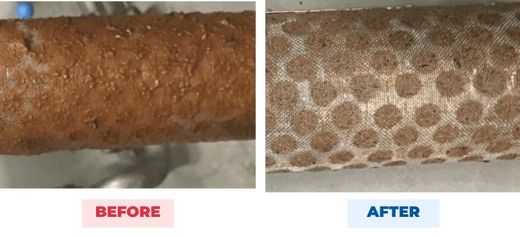
Seawater line at the V&A Waterfront before HydroFLOW, pipe bore packed with mussels and barnaclesBefore
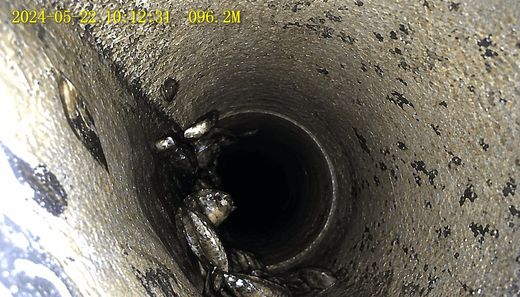
The same seawater line after HydroFLOW, clear pipe bore on camera inspectionAfter

V&A Waterfront, Cape Town: mussels and barnacles had established inside a 200 mm seawater line, blocking strainers and putting jetting on the maintenance rota. Two weeks after one HydroFLOW® unit was fitted, the settled growth had discharged, and no new sea life was found over the six month trial. Read the case study →

Where the Savings Add Up

Biofilm and marine growth carry a continuous cost across a water system — energy, chemicals, contractor days, filters and plant life. Hydropath addresses six of the most significant recurring costs.

  • Longer Cleaning Intervals, Fewer Outages

    Barnacles, mussels and the biofilm they settle on cannot get a grip, so there is nothing to chisel or hot-soak off later. At a zinc smelter in Tasmania, strainers hot-soaked every two weeks ran 4–5 months between cleans in high-flow areas; aboard MV Detroit Express, fresh-water-generator CIP cleans fell from about 36 to 5 in a year; and a Chilean desalination intake ran 223 days without cleaning.

  • Longer Filter, Strainer & Membrane Life

    Detached growth is caught once instead of regrowing in place. A Middle East RO plant stretched cartridge life from 30–60 days to 250 days with fewer disinfection shutdowns; at Obolon Brewery in Kyiv, a filter fully blocked by black and yellow biological deposits rinsed clean within 30 days with no chemicals.

  • Water Safety the Programme Can Prove

    Controls reach bacteria the biofilm was hiding. An Indiana hospital saw Legionella fall from 7 CFU/mL to 1 CFU/mL or non-detectable in 16 days, and a proposed $75,000 treatment system was not required; Grand Hotel Terme di Comano, with thermal shock alongside, reported certified results below 10 CFU/L in every June sample.

Don’t take our word for it — test it on your own system.

Every cleaning-interval, biocide, energy and count figure on this page is designed to be independently verified: a unit on one line or one exchanger, measured against an untreated one and your own inspection photos, dosing logs and sampling results, with a documented step-by-step testing protocol.

Biofouling Control — Physical, Not Chemical!

Non-chemical biofilm and macrofouling control for seawater intakes, cooling water, heat exchangers and pipework, powered by a patented electronic signal

HydroFLOW® induces a patented ~150 kHz signal into the water through the pipe wall. In a fouling system the signal does two things. It destabilises the sticky matrix that bacteria build around themselves, so established biofilm loses its grip and detaches in fragments instead of thickening in place; and it charges the suspended particles and cells in the water, which then collide and clump together in turbulent flow into larger flocs that filters and strainers can catch. Bacteria that were sheltered inside the film are exposed, so whatever residual chlorine or biocide the site already runs reaches them.

The signal propagates in both directions along the pipework, so a single unit on an intake, a header or a plant-room feed treats the circuit beyond it — through steel, copper, GRP and plastic alike, and through lagging. It needs no cut into the pipe, no dosing point and no consumables, and it keeps working on water standing in the system: idle lines, laid-up plant and weekend shutdowns are exactly when biofilm consolidates and larvae settle.

It is not a magnet and it is not a biocide: nothing is killed and nothing is added to the water. What changes is the surface — mussel and barnacle larvae settle preferentially on biofilm, so a surface that cannot hold a stable film gives macrofouling nothing to build on, which is why the Cape Town seawater line discharged its settled growth and stayed clear. Your chlorination consent, sampling programme and screening stay exactly as they are; we can supply the technical documentation your water-treatment contractor or class surveyor asks for.

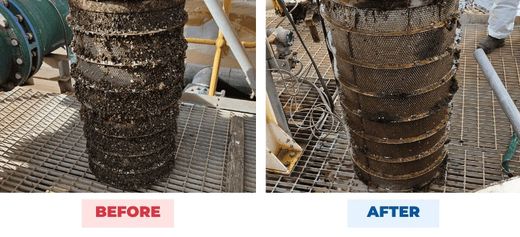
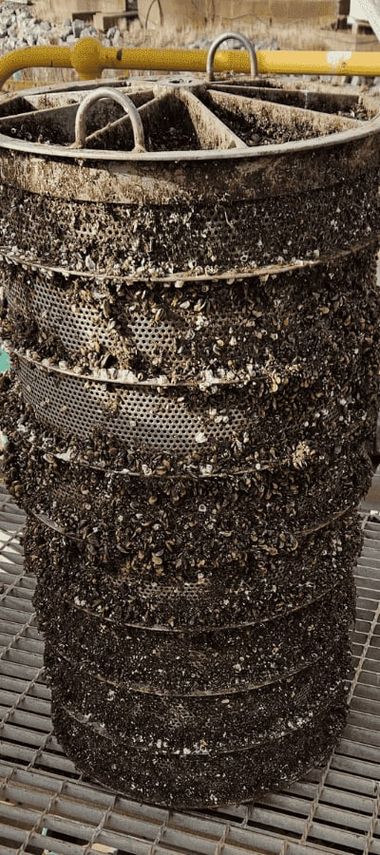
Seawater strainer basket crusted with mussels and marine growth at a zinc smelting operation in Tasmania

One Technology — Cleaner Lines, Fewer Cleans

Across seawater intakes, condensers, cooling towers, membranes and pipework, one fitting changes what fouling costs you.

  • Existing Growth Loses Its Grip

    The signal works on the film that is already there, not just on new attachment: the matrix holding established biofilm to the surface destabilises, fragments detach and flow to the strainers, and the shell beds settled on that film follow. At Hong Kong's seawater-cooled chillers, condenser tubes were free of biofilm after two months and the automatic tube-cleaning system was shut down.

  • Gradual and Safe by Design

    Progressive release avoids shock-dosing the system or the discharge: no chlorine spike, no dead organisms slugging the outfall, no line drained for a hot soak. Expect detached growth at strainers and filters in the first weeks — at the V&A Waterfront, large amounts of sea life and mussel fragments discharged after two weeks — then minimal material once the system has cleared. That is the line clearing, and it settles.

  • Measured Against an Untreated Line

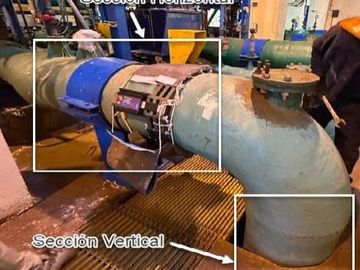
    At a desalination plant in Chile, one Custom i20″ unit was fitted to the Line 4 seawater suction line on 28 November 2024 and Line 6 was left untreated as a control. Over four inspections in 223 days, the treated line showed no mussel proliferation and an odour-free, visible pipe surface, while the control line grew larvae, small shells and mature mussels over 3 cm. See the record.

A Different Approach to Biofouling

How HydroFLOW® compares with the usual ways of keeping biological growth out of a water system.

HydroFLOW®Physical conditioner — no chemicalsBiocide / chlorine dosingOxidising and non-oxidisingCopper-anode MGPS / electro-chlorinationMarine growth prevention systemsMechanical cleaningJetting, hot soak, pigging, CIP
How it worksElectronic signal destabilises biofilm, so growth detaches and cannot re-settleDosed chemical residual kills organisms in the waterCopper ions or hypochlorite deter settlementRemoves growth after it has formed
Macrofouling (mussels, barnacles)Documented Treated lines stayed clear against untreated comparators, 6–7 monthsManaged Larvae still settle where residual lapsesYes The conventional answer; anodes depleteReactive Regrows between cleans
Biofilm on heat-transfer surfacesDocumented Tubes free of biofilm at two months; COP up 10–15%Partial Residual struggles to penetrate an established filmPartial Aimed at settlement, not slime on tube wallsYes Exchanger opened or line offline
Discharge & consentNothing added No residual to declare; worked within a 0.2 ppm limitLimited Discharge capped by consent; monitoring and reportingRegulated Copper and chlorine in the outfallWaste Chemicals and removed growth to dispose of
Standing or low-flow waterContinues Works through lay-up, idle lines and shutdownsLapses No flow, no doseReduced Distribution depends on flowNone Nothing between cleans
Consumables & handlingNone No chemicals, no anodesChemical purchase, storage, COSHH and dosing pumpsAnode replacement and electrode maintenanceContractor days, chemistry, flushing water
Removes existing growthYes Detaches gradually; expect debris at strainers early onPartial Dead shells stay in placeNo Deters new settlement onlyYes At the cost of the outage
Downtime to fit or runNone Installs around the existing pipe; plant keeps runningInjection point, pump, tank and monitoringCut-in anodes; dry-dock or drain-downLine or exchanger offline for every clean

Typical products in each category; individual systems vary. HydroFLOW® is not a disinfectant, not a biocide and not a filter: screening, filtration, your chlorination consent and your Legionella risk assessment all stay in place.

Applications

Where biofouling is treated

Biofouling turns up wherever untreated water flows — from a ship’s sea chest to a hospital’s calorifier. Each sector links to its own treatment page.

Process Overview

Simple Installation. No Line Out of Service.

Our patented technology retrofits onto your existing pipework while the plant keeps running.

Proven On Site

Real Systems. Real Results.

Drawn from Hydropath installations and our customers’ own inspection records, lab results and data logs across seawater intakes, power plants, hospitals and cooling towers.

  • HydroFLOW unit installed on a seawater intake pipe, desalination plant biofouling case study, ChileDesalination

    Chile Desalination: 223 Days No Intake Cleaning

    A Chile desalination plant kept its seawater intake line clear of mussels for 223 days with a HydroFLOW® Custom i20" unit, while the control line fouled.

    223 days
    no cleaning or chemicals
    0
    mussels in treated line
    >3 cm mussels in control line
  • Treated and untreated plate heat exchanger water channels at a seawater pump station, Hong KongCommercial & HVAC

    Hong Kong PHE: Treated Largely Clear, Untreated Blocked 3 ft

    A treated plate heat exchanger stayed largely unblocked over six months while its untreated twin blocked to 3 ft, holding 14-18% higher seawater flow.

    Treated PHE largely unblocked
    Untreated blocked to 3 ft
    14-18% higher seawater flow
  • HydroFLOW unit installed on large industrial pipeworkPower Stations

    China LNG Plant: 97% Less Bacteria, $56k Estimated Annual Savings

    Two HydroFLOW Multihead 50" units cut bacteria 97% and improved condenser performance at an LNG power plant in China.

    97%
    bacteria reduction
    7.4%
    transit temp reduction
    $56k
    estimated annual savings

Support & FAQ

Frequently Asked Questions

What is biofouling?

Biofouling is the unwanted growth of living organisms on a wetted surface — the inside of a pipe, a heat-exchanger plate, an intake screen, a ship’s hull. It starts within hours as bacteria attach and secrete a slime layer (biofilm, or microfouling) and, in natural waters, progresses within weeks to algae, mussels and barnacles settling on that film (macrofouling). The cost is physical: the film insulates heat-transfer surfaces, and the shell beds narrow intakes and strainers until pumps work harder for less flow. HydroFLOW® is a non-chemical way of controlling it: an electronic signal that destabilises the biofilm so growth detaches and cannot consolidate, documented at sites from a Chilean desalination intake to seawater-cooled chillers in Hong Kong.

What is the difference between biofouling and biofilm?

Biofilm is the first stage of biofouling and the foundation of the rest. A biofilm is the thin, slimy layer that bacteria build on a surface — cells held in a sticky matrix they secrete themselves, which protects them from the chlorine, biocide and heat aimed at them. Biofouling is the broader term for everything that accumulates on top: algae, then the mussels, barnacles and other organisms whose larvae settle preferentially on an existing film. In a freshwater cooling tower the problem usually stops at biofilm and slime; in a seawater intake it becomes shell beds that block a line. Either way, controlling the film is the lever — which is why HydroFLOW® acts on the biofilm’s matrix rather than on the organisms one by one.

What causes biofouling in cooling water and seawater systems?

Three things together: a wetted surface, nutrients and time. Cooling water is warm, oxygenated and continuously topped up with nutrients from the make-up, so bacteria attach and multiply on fill, basins and condenser tubes; seawater adds a living supply of larvae with every litre drawn from a harbour or estuary. Low flow and standing water accelerate it — dead legs, lay-up periods, weekend shutdowns and idle lines are where a film consolidates into something a shock dose no longer shifts. Scale makes it worse, because a rough mineral surface gives biofilm a foothold. At a 180 MW LNG plant in China, seawater condensers combined biofilm and scale and needed cleaning every four to six months; at the V&A Waterfront in Cape Town, mussels and barnacles had established inside a 200 mm line until strainer blockages made jetting routine.

How do you prevent biofouling in seawater intakes and heat exchangers?

The conventional toolkit is screening to keep the large organisms out, chlorination or a copper-anode system to deter settlement, and periodic mechanical cleaning — jetting, hot-soaking, pigging or opening the exchanger — to remove what settles anyway. Each has a cost the discharge consent, the maintenance budget or the outage log records. HydroFLOW® adds a physical layer that works on the surface itself: with the biofilm unable to consolidate, larvae have nothing to settle on and established growth detaches. The documented records are controlled comparisons. At a Chilean desalination plant, the treated suction line ran 223 days with no mussels while the untreated control line grew mussels over 3 cm; at a Hong Kong seawater pump station, the treated plate heat exchanger held 14–18% higher seawater flow than its untreated twin over six months and stayed largely unblocked while the untreated unit blocked to a depth of three feet.

What is the slime or green growth in my cooling tower?

Almost always biofilm — a community of bacteria, and in sunlight algae, held together in the slimy matrix they secrete — rather than a chemical residue. The green or brown film on tower fill and basins is the visible part; the costly part is the thinner film on condenser tubes, which insulates heat transfer several times more effectively than scale of the same thickness and shelters bacteria from the biocide dose. Two of the usual tells are biocide demand that keeps rising and bio-counts that fall after each treatment and drift back. HydroFLOW® addresses the film rather than the count: at a 2.3-million-square-foot US office complex, cooling-tower bio-counts fell from approximately 100,000 CFU to below 1,000 within days of installation, alongside reduced scale and biofilm, and at a US plastics plant, recirculating water baths showed no algae after chlorine dosing was cut 75%.

Does electronic water treatment actually work for biofilm?

Scepticism here is earned. The best-known independent test, ASHRAE research project RP-1361 (2010), ran five non-chemical devices — magnetic, electrostatic, pulsed-field, ultrasonic and cavitation — in a model cooling tower and found none of them measurably reduced microbial populations. We would not argue with that result for those devices, and we would make three distinctions. First, mechanism: HydroFLOW® is not a magnet or a static coil; it induces a patented ~150 kHz signal into the water that destabilises the biofilm matrix and flocculates suspended cells, and it is sized to the pipe and the flow. Second, evidence: the records on this page are site measurements with comparators, not brochure claims — a treated intake line against an untreated one for 223 days, a treated plate heat exchanger against its untreated twin for six months, bacteria counts of 300,000 falling to 9,000 CFU on seawater condensers. Third, verifiability: we recommend judging it the way those sites did, with a unit on one line measured against another, and we will help set the protocol.

How does HydroFLOW affect bacteria, mussels and barnacles if it is not a biocide?

It changes the surface they depend on, not the organisms themselves. Bacteria in a biofilm are held to the pipe wall by a matrix of polymers they secrete; the induced signal destabilises that matrix, so established film detaches in fragments and new film cannot consolidate. Cells and particles freed into the water pick up a charge and clump together in turbulent flow into flocs large enough for strainers and filters to catch — and bacteria that were sheltered inside the film are exposed to whatever residual chlorine or biocide the site already runs. Mussel and barnacle larvae settle preferentially on an existing biofilm, so a surface that cannot hold a stable film gives them nothing to build on. That is why a car carrier’s cooling plates were found clean of barnacles after 13 months with no chemicals used, and why the Cape Town seawater line discharged its settled growth within two weeks and stayed clear for the six-month trial.

Does HydroFLOW work in seawater?

Yes — seawater systems are where much of the biofouling record was built, because the fouling is fastest and the chemical route is most constrained by discharge limits. The unit installs around the outside of the pipe and never contacts the flow, so salinity, GRP or lined pipework and lagging make no difference to the signal. Documented seawater sites include seawater-cooled chiller plants in Hong Kong (tubes free of biofilm at two months, COP up 10–15% on a 14-month log, within a 0.2 ppm chlorine limit), a seawater-cooled LNG power plant (bacteria down 97%), a desalination intake in Chile (223 days without cleaning), a Tasmanian zinc smelter drawing from the Derwent Estuary (strainer cleaning interval from two weeks to 4–5 months in high-flow areas) and a container ship’s fresh-water generator (CIP cleans from about 36 to 5 a year).

Does biofilm control help with Legionella?

Indirectly but materially. The WHO describes Legionella surviving and growing inside the biofilms that develop in water systems, sheltered from the temperature and disinfectant meant to control it — which is why counts so often fall after a treatment and drift back. Disrupting the film lets the existing controls reach the bacteria. At an Indiana hospital, potable-water Legionella fell from 7 CFU/mL to 1 CFU/mL or non-detectable within 16 days of installation and stayed stable after 15 months, and a proposed $75,000 treatment system was not required; at Grand Hotel Terme di Comano, a programme that combined HydroFLOW® with thermal shock and purging reported certified results below 10 CFU/L in every June sample. HydroFLOW® is not a disinfectant, so the risk assessment, temperature regime and sampling stay in place — our Legionella page sets out the full picture.

Is HydroFLOW a disinfectant, and can we stop dosing biocide?

No, and not on day one. HydroFLOW® does not kill organisms or sanitise water: it is not a disinfectant and not a biocide, and any claim that a device alone will keep a cooling tower or potable system compliant should be treated with suspicion. What the documented sites show is the workload changing once the biofilm stops sheltering bacteria — a California medical centre cut biocide 75% while holding CFU below 1,000, with side-stream filtration added alongside; a US apple packhouse held non-detect counts as chlorine fell from 40–50 ppm to 10 ppm; and the China LNG plant worked within its existing electro-chlorination. Reductions are measured against each site’s own programme, with its sampling, consent and risk assessment intact; where our assessment is that biofilm is not your problem, we will say so.

Is it a filter, and what happens to the growth that comes off?

It is not a filter, and the first weeks prove it: expect more at the strainers, not less. Established film and settled growth detach as the signal takes hold, and that material has to go somewhere — at the V&A Waterfront, large amounts of sea life and mussel fragments were discharged at the intake filter after two weeks before the line settled to minimal material; at Obolon Brewery, a fully blocked filter rinsed clean with running water by day 25. Keep screening and filtration in place, check strainers more often in the first month, and size for the release if a line is known to be heavily fouled. If your primary problem is suspended solids or supply quality rather than growth, filtration is the answer and we will tell you so.

Can it be fitted without shutting the system down, and how quickly will we see results?

Yes to the first: the unit installs around the outside of the existing pipe — no cutting, no drain-down, no dry-dock — typically in under an hour with the system running, which is how the Cape Town seawater line was fitted between pump and exchanger with no shutdown required. Results depend on what you measure. Bio-counts move first — the US office complex saw them fall within days. Settled growth releases over weeks — Cape Town discharged in two weeks. Surfaces are clean over months — Hong Kong’s condenser tubes at two months, a Middle East RO plant’s cartridge life rising over the following year. And the records that prove it take a season or more: Chile’s 223-day controlled run and a 14-month COP log. Lay-ups and shutdowns do not pause it — the signal keeps working on standing water.

Ready When You Are

Ready to Keep Intakes, Condensers and Pipework Clear?

Tell us about your system — the water it draws, what is fouling and how often you clean it — and our team will recommend the right unit for biofouling control and set out what to expect, including where our assessment is that we cannot help.