19% of global withdrawals
Industry and energy account for around 19% of the world's freshwater withdrawals — rising to 57% in Europe. Water reused to its limit is water that scales.

Industry Solutions
Manufacturing, Industrial & Mining Water Treatment
Every industrial site runs on water it did not choose — hard, high-TDS, recycled or abstracted. That water scales cooling circuits, boilers, heat exchangers, pipelines and pump impellers, and the plant pays for it in energy, chemicals, cleaning downtime and lost output. HydroFLOW® is chemical-free industrial water treatment technology that controls scale and biofouling from a single install — retrofitted to live plant, with no shutdown and no consumables.
Results from named-site case studies; vary by site conditions and baseline operation. View all industrial case studies →
Industrial water is working water. It is recirculated through cooling towers, pushed through heat exchangers, boiled into steam, pumped down hydrotransport lines and reused until it is saturated. Every one of those steps increases the water's propensity to scale, and once it becomes supersaturated the dissolved minerals bond to an equipment surface — especially hot surfaces — as hard calcium carbonate, gypsum or sulphate scale. That is why scale forms fastest on the equipment you can least afford to lose — condenser tubes, boiler waterside, plate exchangers, spray nozzles, pump impellers and pipeline walls.
It rarely fails suddenly. It shows up first as creeping energy cost and shorter intervals between cleans, then as a stoppage nobody planned for.
Typical signs your process water is scaling up:
Just 1 mm of scale can cut heat-transfer efficiency by around 7% — and on a steam boiler, as little as 0.8 mm (1/32") of waterside deposit adds roughly 2% to fuel consumption. It is an invisible surcharge on every kWh and every therm the plant buys.
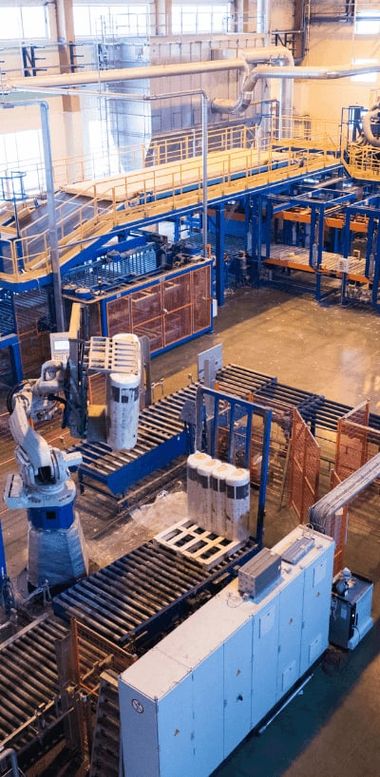
Industry and energy draw around 19% of the world's freshwater, and most of it is used more than once. The harder that water is recycled, the more concentrated it becomes — and the more aggressively it scales. The cost lands in three places at once: energy burned behind fouled heat-transfer surfaces, chemicals bought to hold minerals in check, and production lost to cleaning — whether it was on the schedule or not. Every planned descale is paid for in lost output; the stoppage nobody planned for is a crisis. Unplanned downtime alone costs the world's 500 largest companies an estimated $1.4 trillion a year — around 11% of turnover.
Industry and energy account for around 19% of the world's freshwater withdrawals — rising to 57% in Europe. Water reused to its limit is water that scales.
Unplanned downtime costs the Fortune Global 500 an estimated $1.4 trillion a year — around 11% of turnover. Fouling and scale-driven cleaning are a recurring contributor.
65.7% of mining and metals facilities worldwide sit in areas exposed to a high level of at least one physical water risk — putting every cubic metre of process water under scrutiny.
Where the money actually goes: the headline figure on a descale invoice is rarely the real cost. Add the fuel or electricity burned while the surface was fouled, the production hours lost during the clean, the antiscalant and acid bought in the meantime, the labour and COSHH handling, and the shortened life of the exchanger or impeller underneath. That total is what physical scale control is measured against — and it is the reason payback on an industrial site is usually counted in months, not years. On heat-transfer surfaces the mechanism is well documented: as little as 0.8 mm of waterside deposit adds roughly 2% to boiler fuel consumption.
Sources: UNESCO, UN World Water Development Report 2022 — Groundwater and Industry · Siemens, The True Cost of Downtime 2024 · ICMM, Global Mining and Metals Water Dataset · US DOE, Steam Tip Sheet #7 — Clean Boiler Waterside Heat Transfer Surfaces. Figures are study- and operator-reported estimates; individual sites vary.
On an industrial or mining site, water problems hit the three things that decide the P&L — throughput, energy and maintenance. Left untreated, scale and biofilm compound across every wetted surface in the plant.
Fouled exchangers, overheating machines and blocked lines force cleaning shutdowns that were never in the plan — and on a continuous process, an hour lost is an hour that cannot be recovered.
✓ With Hydropath Treats new scale and clears existing deposits gradually while the plant keeps running — a Philippines injection moulding plant went from acid cleaning every 3–6 months to once a year, with no overheating stoppages.
Scale is an insulator. On condensers, plate exchangers and boiler tubes it forces the plant to burn more fuel and more power to move the same heat — a cost that never appears on a maintenance line item.
✓ With Hydropath Keeps heat-transfer surfaces clean so duty holds — a Minnesota steam boiler dropped its stack temperature by 24°F and gained 8% heat-transfer efficiency, earning back 216% of the investment within a year.
Antiscalant, acid, biocide and softener salt are a permanent operating cost with storage, dosing, monitoring, handling and discharge consent attached — and they cap how hard the water can be recycled.
✓ With Hydropath Physical treatment with no consumables — a Texas manufacturing plant cut chemical use by 75%, and Imperial Oil's Kearl Lake site took antiscalant dosing from 2.0 ppm to 0.0 ppm.
In mining and high-solids process water, gypsum or sulphate scale narrows pipelines, blocks impellers, seizes valves and throws flowmeters out — driving pumping energy up and carrying capacity down.
✓ With Hydropath Conditions the water so minerals stay in suspension as fine crystals — at the Norilsk mine, pipeline occlusion fell 8.8× and 2.26× more pulp was pumped through the same lines.
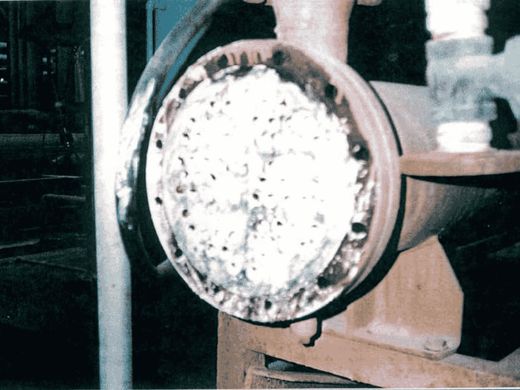
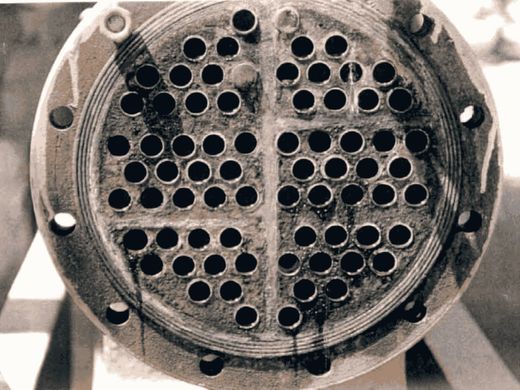
Shell-and-tube heat exchanger: tube sheet blocked with limescale, then clear after fitting HydroFLOW® — pressure drop down from 1.2 to 0.3 and heat transfer up from 200 to 500 kcal/hour, with no acid clean and no shutdown. Read the case study →
Scale and biofilm carry a continuous cost across an industrial site — energy, chemicals, water, maintenance and lost output. Hydropath addresses six of the most significant recurring costs.
Reduce antiscalant, biocide, acid and softener salt. A Texas factory cut chemical use by 75%, and Imperial Oil took antiscalant to 0.0 ppm.
Hold solids in suspension and run higher cycles of concentration on cooling and process water — the same Texas plant lifted its operating conductivity 3.5× on a depleting well supply.
Around 1 mm of scale can cut heat transfer by about 7%. Cleaner surfaces protect duty — a Minnesota boiler gained 8% heat-transfer efficiency.
Fewer acid cleans and fewer scale-related stoppages — a Philippines injection moulding plant moved from 3–6 monthly cleaning to yearly, and a cement plant eliminated daily nozzle cleaning.
Supporting scale and corrosion control helps protect exchangers, boilers, condensers, pumps and pipelines — deferring costly repair, relining and replacement in hard-duty service.
Lower chemical, energy and maintenance spend builds quick payback — Imperial Oil reported 7.2 months, and a Minnesota boiler paid back in 5.8 months, earning back 216% of the investment within a year.
Every energy, chemical and maintenance saving on this page is designed to be independently verified using a documented, step-by-step testing protocol run on your own cooling circuits, boilers, exchangers and process lines.
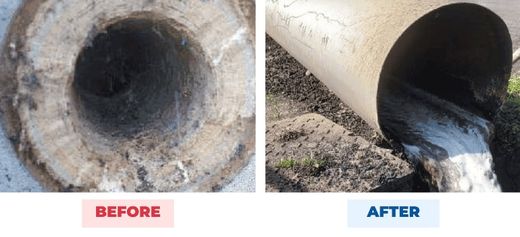
Thames Water, East Hyde: struvite had been returning within weeks and narrowing the centrate line. One HydroFLOW® i Range unit on the sludge feed gave zero new scale across a six-month trial, with longer service intervals.
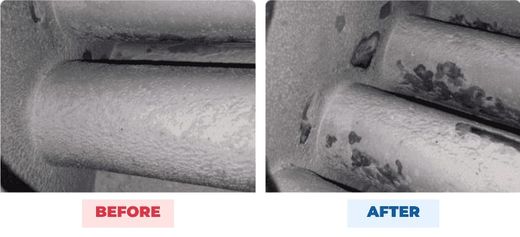
Minnesota steam boiler: existing waterside scale made brittle and purged through blow-down, with the softener left in place. Stack temperature down 24°F, heat transfer up 8%, and the unit paid for itself in 5.8 months.
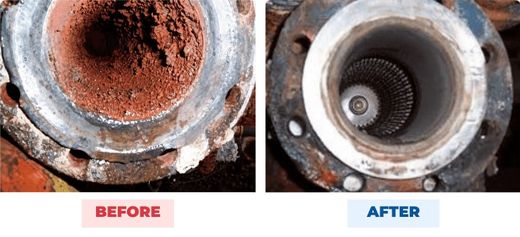
Chile copper mine: process, effluent and return-water pipelines from 6″ to 30″ kept clear without chemicals or mechanical cleaning — so flowmeters read true, valves stay operable and pipe sections are not replaced.
A patented electronic signal that conditions process water for cooling circuits, boilers, heat exchangers, pipelines and pumps
HydroFLOW® induces a patented ~150 kHz signal into the water through the pipe wall. The signal changes how dissolved minerals behave: instead of bonding to boiler tubes, exchanger plates, nozzles and impellers as hard deposit, calcium, magnesium and sulphate ions form loose clusters in the water. When the water concentrates and becomes supersaturated, those clusters crystallise in suspension — as fine, powder-like crystals carried away in blowdown, filtration or the process stream rather than fouling surfaces.
The plant therefore gains control at the point where deposits form — the moment of crystallisation — rather than cleaning them off afterwards. There are no consumables to buy, no dosing or monitoring regime attached to it, and no pipework to modify. The signal propagates in both directions through the pipe, so one correctly sized unit conditions a whole circuit from a single fitting, working continuously on any pipe material from 15 mm tube to several metres industrial main.
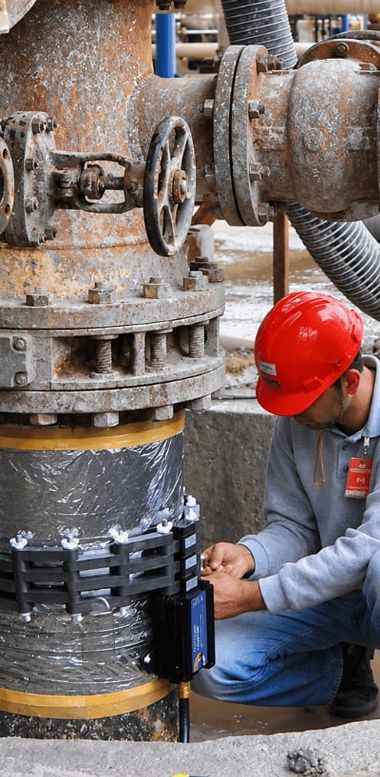
From the cooling tower to the boiler house to the pipeline, a single fitting alters the scale and energy position across an industrial or mining operation.
Because new scale stops forming, the water regains capacity to dissolve minerals — and slowly draws existing deposits back into solution, layer by layer, while the plant keeps running.
Progressive removal avoids the risks of acid descaling — minimising dislodged flakes that can block valves and strainers, with no corroded metal and no system shutdown while it happens.
At a Chinese LNG plant, two Multihead 50″ units on 1,270 mm river water condenser pipes cut bacteria by 97% and saved an estimated $56,000 a year.
How HydroFLOW® compares with the conventional methods of protecting industrial and mining plant from scale.
| HydroFLOW®Physical conditioner — no chemicals | Salt water softener | Antiscalant / chemical dosing | Acid descaling & mechanical cleaning | |
|---|---|---|---|---|
| How it works | Electronic signal crystallises minerals in suspension so they can't bond as scale on plant surfaces | Removes calcium & magnesium from make-up water, exchanging for sodium | Chemicals interfere with crystal growth in the water | Acid, jetting or pigging strips deposits after they have formed |
| Effect on production | Protects it Fitted live, plant keeps running | Cut-in installation and regeneration cycles | Partial Chemistry limits how hard water can be recycled | Stops it Plant offline for every clean |
| Consumables | None No salt, no chemicals | Regular salt refills + regeneration water | Continuous chemical purchase, storage & COSHH handling | Acid + neutralising + labour each clean |
| High-TDS & sulphate scale | Yes Works on gypsum, barium and strontium sulphate in high-solids water | No Not viable on high-TDS process water | Partial Specialist chemistry, high dose rates | Partial Reactive, repeated each cycle |
| Removes existing scale | Yes Gradually redissolves deposits | No Prevention only | Partial Depends on programme | Yes But with downtime & risk |
| Downtime to fit | None Clamps on the pipe, plant stays live | Cut-in installation + drain + power | Dosing pumps, tanks & monitoring | Plant offline for each clean |
Comparison reflects typical products in each category; individual systems vary. Corrosion-control chemistry, pH management, boiler water chemistry and any Legionella duties on open cooling systems are separate and should be maintained as required.
Applications
An industrial site’s water problem is rarely confined to one location; it extends from the cooling tower to the boiler house to the pipeline. Each application below links to its dedicated treatment page.
Controls scale on fill, condensers and pipework so industrial cooling towers run higher cycles of concentration with less blowdown and dosing.
Reduces waterside deposit on boiler tubes, protecting fuel efficiency — and softening existing scale so it purges through blow-down.
Reduces fouling on plate and shell-and-tube exchangers to protect approach temperatures, pressure drop and process duty.
Maintains carrying capacity on process, effluent, return-water and hydrotransport lines — reducing occlusion and the pumping energy behind it.
Keeps impellers, seals and wear rings clear of deposit — from ordinary hard water to high-solids service — protecting duty point and avoiding overheating trips.
Addresses gypsum, barium and strontium sulphate and other ionic scaling that softeners and conventional antiscalant programmes struggle with.
For process water pushed to its limits — evaporators, recycled and reclaim circuits, and any stream run deliberately close to saturation.
Helps disrupt biofilm across cooling circuits, seawater intakes and process lines, protecting flow, hygiene and heat-transfer efficiency.
Supports corrosion control by limiting deposit and under-deposit attack on wetted surfaces — extending asset life alongside your existing regime.
Process Overview
Our patented technology retrofits onto your existing pipework while the plant remains in operation.
The HydroFLOW® unit installs around your existing pipework — cooling, boiler feed, exchanger inlet, process line or pump discharge. No cutting, no welding, no production stop. Compatible with any pipe material.
A patented electronic signal propagates in both directions through the water, treating the whole circuit from a single point — working continuously, 24/7, with no dosing and no monitoring regime.
New scale stops forming and existing deposits gradually redissolve. Cleaning intervals stretch, chemical dosing falls, heat transfer and pumped throughput hold, and unplanned stoppages reduce.
Proven On Site
Named-site installations across manufacturing, heavy industry and mining, documented with the operators’ own measurements.
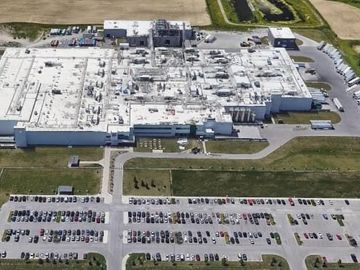
Two HydroFLOW Custom units cut ferric chloride dosing up to 50% while holding discharge compliance at a Hamilton food WWTP.
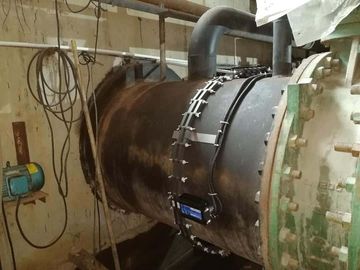
Two HydroFLOW Multihead 50" units cut bacteria 97% and improved condenser performance at an LNG power plant in China.
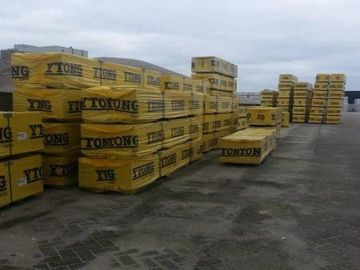
HydroFLOW P60 and i100 units eliminated twice-yearly acid cleaning of a cement process pipeline at Xella's Meppel factory.
Support & FAQ
Chemical-free industrial water treatment controls scale and biofouling by changing the physics of how minerals crystallise, rather than by dosing something into the water. HydroFLOW® clamps onto the outside of existing pipework and induces a patented ~150 kHz signal through the pipe wall. Calcium, magnesium and sulphate ions form loose clusters that crystallise in suspension once the water becomes supersaturated, so they are carried away in blowdown, filtration or the process stream instead of bonding to boiler tubes, exchanger plates, nozzles, impellers and pipeline walls.
There is no salt, no antiscalant, no dosing pump and no COSHH handling — and because it is fitted externally, it goes onto live plant with no shutdown. See how the technology works →
Yes — that is where it tends to earn its keep fastest. Softeners become impractical and antiscalant dose rates climb steeply as total dissolved solids rise, but the signal acts on crystallisation rather than on water chemistry, so it keeps working as the water concentrates.
That is why it is used on mine hydrotransport lines, reclaim and return-water circuits, evaporator feeds and cooling systems deliberately run at high cycles. A Texas manufacturing plant lifted its operating conductivity 3.5× while cutting chemical use by 75%, and a Phoenix plant ran to 10,000 microsiemens with no scale deposits.
Yes. Mining process water frequently produces gypsum (calcium sulphate) and barium or strontium sulphate scale, which is harder to treat than ordinary carbonate limescale.
At an Italian gypsum mine, a Custom 200 mm unit on a 700 m underground pipeline with 90 m of vertical lift ended a three-monthly acid-cleaning cycle. At Norilsk, two Custom 12″ units on 219–245 mm hydrotransport lines running at 60–70 °C gave 8.8× lower occlusion and 2.26× more pulp pumped than the untreated line alongside them. See the mining section →
Gradually, yes. Once new scale stops forming, the treated water regains capacity to dissolve minerals and slowly draws existing deposits back into solution, layer by layer. It is deliberately progressive rather than aggressive, which avoids the two big risks of acid descaling: dislodged flakes blocking valves and strainers, and acid attacking the metal underneath.
At a Minnesota boiler installation the signal made existing waterside scale brittle so it broke apart and purged through blow-down — stack temperature down 24 °F and heat transfer up 8%. On a blocked shell-and-tube heat exchanger, pressure drop fell from 1.2 to 0.3 and heat transfer rose from 200 to 500 kcal/hour.
Yes. The unit clamps around the outside of existing pipework — no cutting, no welding, no draining and no break in production. Installation is typically measured in minutes per unit, and it is compatible with any pipe material, from small copper tube up to 1,250 mm seawater condenser mains.
This is a large part of why sites trial it: fitting it does not commit you to a shutdown, and removing it does not either.
It replaces or substantially reduces the scale-control element — antiscalant, softening and acid descaling. Corrosion inhibitor, pH control, boiler water chemistry and any statutory Legionella duties on open cooling systems are separate functions and should be maintained as required.
In practice most sites reduce rather than eliminate. A Texas factory cut chemical use by 75%; Maple Leaf Foods halved ferric dosing from 200 ppm to 100 ppm; and Imperial Oil’s Kearl Lake site took antiscalant dosing specifically from 2.0 ppm to 0.0 ppm across a 12-month monitored trial.
It depends on what the water currently costs you in chemicals, energy, cleaning labour and lost production, but industrial paybacks reported by our customers are typically counted in months rather than years. Imperial Oil reported 7.2 months; a Minnesota steam boiler reported 5.8 months and 216% ROI; a Texas manufacturing plant reported under a year.
The largest single line is usually not the chemical invoice — it is the production hours recovered from cleaning shutdowns that no longer have to happen. A Netherlands block factory removed two acid cleans a year entirely, and a cement plant ended daily nozzle cleaning.
With a documented, step-by-step testing protocol run on your own plant. We agree the baseline first — chemical dose rates, conductivity or cycles, cleaning intervals, stack or approach temperatures, pumped throughput, energy use — then fit the units and measure the same parameters over an agreed trial period.
Where possible we run it as a side-by-side: at Norilsk one hydrotransport line was fitted and an equivalent line left untreated, and the untreated line lost three-quarters of its flow in 45 days while the treated line held. Results in our case studies are measured and verified by third-party facilities managers and technical staff, and we would expect yours to be verified the same way. Talk to an engineer →
Ready When You Are
Tell us about your cooling circuits, boilers, exchangers, pipelines and current dosing and cleaning routine, and our team will recommend the right units and estimate your potential saving on chemicals, energy and downtime.
Prefer email? Send us your plant detailsView industrial case studies